
How digitalisation has influenced the music industry in the 21st century
From how we listen to and access music, to the tools available for artists to record, market and produce their music independently, digitalisation has impacted every aspect of the music industry.

Since the 1990s the music industry has changed drastically, mostly influenced by the development of streaming services, social media and digitalisation, allowing anyone to record, upload and market their music independently.
Despite the many opportunities these platforms have created for artists to get their music out in the open, it has also come with many challenges, including trying to stand out in an oversaturated market and making a living from music in a time where most songs are available to anyone with internet access.
So how has the music industry truly evolved in the last 20 years, since the start of digitalisation and what are the key developments that have occurred ?
Emergence of the independent artist and social media
It is safe to say that digitalisation has changed the way music is created, produced, marketed, distributed and consumed. It has given everyone a platform to do, what many could have only dreamt about up until 20 years ago.
‘Today the number of people that have access to a recording studio and global distribution channels has multiplied millionfold, since they only need a personal computer and an Internet connection to be able to record, promote and distribute their music themselves from their own home studios (Alvarez, 2017).’
Through social media platforms artists don’t only have the opportunity to market their music independently, but it also increases the engagement between the artist and their fans. Fans can interact with their favourite musicians in the comments or through sharing their posts with others, increasing their exposure and connect with the larger fanbase.
On the other hand the artist gets a better idea of who their target audience is and it helps humanise both parties.
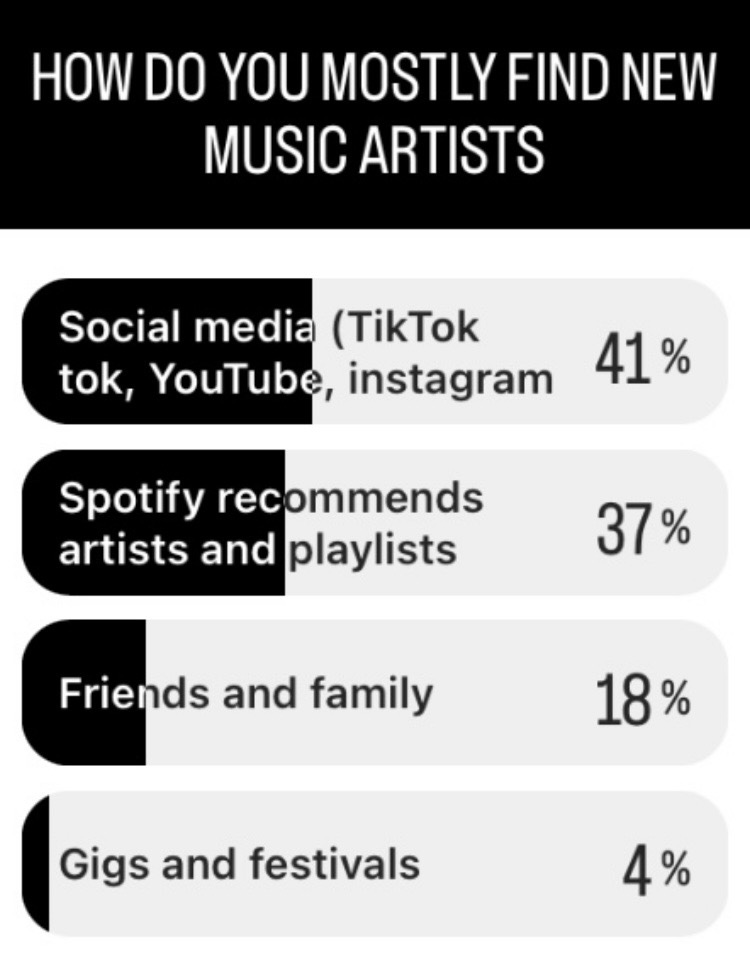
From a consumer perspective platforms such as Tik-Tok and Instagram have exposed me and many others to new artists and songs to add to our daily playlists.
The affects of streaming platforms on both artists and consumers
More Variety
Despite many highlighting the challenges artists face due to Spotify and other streaming platforms, they are not all bad and have had many benefits for both those consuming and creating music.
Most people I know don’t solely listen to one genre, and their playlists cover a range of different types of music, anywhere from rap, to old school rock, to country.
This is quite a modern phenomenon, which is mostly due to the variety of music we are exposed to on streaming services, giving us access to a wider variety of songs and genres at a relatively low price.
In the past most record labels only focused on one genre, creating more division within the music industry. This devision is still present today and often visible through fashion, a certain mindset or hobbies associated with the genre. An article by Josh Wilson (2022) describes music as a way of speaking to the soul and how different kinds of things speak to different people.
Global access and discoverability
When looking at the benefits platforms such as Spotify have created for artists, one of the primary ones has to be the global reach and exposure it has given to musicians.
Back in the day one would be lucky if people in the next town bought your CD or came to one of your gigs, however digitalisation has enabled people to share their creations with people all over the globe.
Similarly to the benefits of social media, many discover new artists through streaming platforms, for example by following curated playlists, especially the ‘discover weekly’ playlists that features new artists or the ‘day list’ that curates a daily playlist based on one of the genres you are mostly listening to at the moment.
Physical music sales
One cannot talk about the digitalisation of the music industry, without mentioning the prominence streaming platforms have in music consumption today and the movement away from physical music, such as Vinyls and CDs.
Despite the convenience created through Spotify and the like, physical music copies have experienced a significant comeback in recent years, which might be influenced by the nostalgic feelings associated with purchasing physical music or wanting to feel more connected to the music in a world where every song is only one click away.
Challenges created by streaming platforms
Visibility
It is easier than ever to release music, however this means that it is harder than ever to gain recognition and get noticed amongst all the competition.
Most artists on platforms such as Spotify do not even reach 1000 monthly listeners. Today being a musician does not only involve making music, but for many especially those starting out also includes marketing and producing their art. Social media plays a crucial role here to achieve visibility and traction.
Pay gap between artists and the industry
There is a lot of money going into the music industry, however this does not mean that musician are being paid fairly.
To put numbers into perspective, it is estimated that Spotify pays an average of $0.004 a stream, which would mean that you would need around 250 to even make one dollar.
This means that musicians increasingly need to rely on other revenues to make a living from music, such as live performances, selling merchandise or making money from promoting their music on social media.
Live music
Live music has always been an essential part of the music industry, as a way for fans to truly connect and experience the music. However this is becoming increasingly more essential for musicians to be able to make a living from their craft, in a world where music is available to anyone at a low cost.
When starting out in the industry, live performances are crucial when trying to attract people to your music, network and build a community or fanbase.
Major artists, including the Beatles, Amy Winehouse and the Rolling Stones to name a few all started out playing in local pubs and grass root venues across the UK.
Therefore it is vital that these are supported, as they create a stepping stone for anyone aspiring to succeed within this increasingly more competitive industry, as well as being community hubs and cultural centres where people can connect with likeminded souls.
Music Venue Trust
As of last May, it is the policy of the UK government that every ticket sold at an arena or stadium should contain a certain financial contribution that supports grassroots music venues, artists and promoters (Music Venue Trust).
Through this artists can acknowledge their roots and early days in the industry and support the emerging talent and venues that play such an integral part in shaping the future of music and culture in this country.
So if you are not sure what to do on your next day off, maybe go support a local band and through this encourage those dreaming of making a living out of their passion.
All in all digitalisation has created the accessibility for many to create, share and listen to a wide variety of music, which I see as a mostly beautiful and positive development. However there is a lot that needs to change, to create an industry,
where artists are payed fairly and given the credit they deserve, in an industry currently dominated by large streaming platforms.
Keri Knight